In a 2021 study, 56% of the participants surveyed said the main reason they took up the carnivore diet was an autoimmune disease.
And the result?
After six months of eating meat and animal products, 89% of them reported a marked improvement in their condition—or even that they had healed completely.
So why is the carnivore diet so effective for autoimmune disease in particular? Because it cuts out a whole range of substances that damage your body and set off your immune system.
The main things that irritate your immune system include:
- a diet high in carbohydrates and added sugars
- plant toxins
- plant antinutrients
- FODMAPs
- industrial seed oils
- toxic molds (mycotoxins)
- food colorings and stabilizers
If you cut these out and replace them with nutritious animal foods, you’ll dramatically reduce the inflammation in your body.
Autoimmunity and inflammation
Inflammatory diseases and chronic inflammation are umbrella terms for autoimmune disease, which means your immune system is attacking your own tissues.
Inflammation is an important, natural process that developed over thousands of years, back when we were hunters living mostly on meat, and it helps us fight infections and heal injuries.
In the context of a modern diet built on foods our bodies weren’t made for, though, this natural process becomes a big problem.
The standard diet is loaded with grains, fruit, added sugars, industrial seed oils and vegetables that contain thousands of naturally occurring pesticides and antinutrients.
Most of these substances aren’t acutely toxic, so they won’t cause an immediate bad reaction. But eating them again and again damages your body’s tissues and keeps triggering inflammatory responses.
Autoimmune diseases the carnivore diet targets
The main autoimmune diseases that show significant improvement with eating meat and animal products are:
- rheumatism
- psoriasis
- ulcerative colitis
- Crohn’s disease
- multiple sclerosis
- heart disease
These diseases take a toll on almost every organ in the body.
Common symptoms of these autoimmune conditions include:
- inflammation
- stiff joints
- pain
- rashes
- fatigue
- low mood and depression
- anxiety
- digestive problems (bloating, diarrhea, bloody stools)
How common are these autoimmune diseases?
According to the WHO and research by the RAND Corporation, this is where things stand:
- diseases linked to chronic inflammation are the most common cause of death worldwide
- diseases linked to chronic inflammation will keep spreading over the next 30 years
- 60% of Americans have at least one autoimmune disease
- 42% of Americans have more than one autoimmune disease
- 12% of American adults have more than 5 autoimmune diseases
- worldwide, 3 out of 5 people die of a chronic inflammatory disease such as heart attack, respiratory disease, heart disorders, cancer, obesity or diabetes
The carnivore diet and the mismatch theory
The mismatch theory says that modern autoimmune diseases are caused by a mismatch between the way we eat today and our evolutionary physiology.
Many scientists refer to modern autoimmune diseases as diseases of civilization.
These diseases are tied to the modern way of life, because they only started to appear with the arrival of agriculture, roughly 10,000 years ago.
Autoimmunity starts in the gut
Since modern food is considered the cause of autoimmune diseases, it makes sense that the first thing to take the hit is the tissue of the gut, through inflammatory damage.
Your body is constantly exposed to abrasive fiber, plant toxins, pesticides, toxic molds and antinutrients. All of these antigens are poisonous foreign substances that trigger an immune (inflammatory) response.
Over time, this chronic inflammation weakens the gut lining and leads to leaky gut syndrome (in Czech), also known as increased intestinal permeability.

When the junctions between the cells are damaged, the gut becomes permeable: sugars, toxins and harmful pathogens get into the blood, ride the circulation to other parts of the body and spread pockets of inflammation.
This process has led many scientists to believe that leaky gut is probably the main cause of many autoimmune diseases.
- Exposure
The body is constantly exposed to abrasive fiber, plant toxins, pesticides, toxic molds and antinutrients.
- Inflammation
These antigens trigger an immune (inflammatory) response.
- Leaky gut
Over time, this chronic inflammation weakens the gut lining.
- Into the blood
Sugars, toxins and harmful pathogens get into the blood and spread pockets of inflammation to other parts of the body.
Removing the irritants that cause inflammation
Let’s take a closer look at exactly which harmful substances the carnivore diet cuts out.
1. Carbohydrates and added sugars
Most of the foods you eat on the carnivore diet contain extremely small amounts of carbohydrates and simple sugars.
By now, no one is surprised that there are studies showing that a high-carbohydrate diet increases inflammation, while low-carb eating reduces it.
Sugars and eating too many carbohydrates cause inflammation through the following processes:
- glycation—sugars binding to tissues, DNA, RNA and proteins
- damage to the glycocalyx, the protective coat on the surface of cells that regulates cell functions, including cardiovascular health and the immune response
- feeding harmful bacteria and starving beneficial bacteria in the gut, which leads to leaky gut
- raising LDL (popularly called “bad cholesterol,” even though it isn’t cholesterol and it isn’t bad…)
2. Industrial seed oils
If anything is worse than sugar, it’s these supposedly “healthy” chemical sludges, pushed hard by healthy-eating advocates.
Animal fats are mostly saturated (stable) and monounsaturated (slightly unstable), whereas vegetable oils are made up mainly of omega-6 linoleic acid, a PUFA (polyunsaturated fatty acid).
Linoleic acid—and above all arachidonic acid, which is made from it—are highly inflammatory substances behind the formation of some 20 eicosanoids that cause inflammation.
Animal fats
- Mostly saturated (stable) and monounsaturated (slightly unstable)
Vegetable oils
- Mainly omega-6 linoleic acid, a PUFA (polyunsaturated fatty acid)
- Linoleic acid and the arachidonic acid made from it: behind some 20 eicosanoids that cause inflammation
Studies show that these substances may be behind a number of chronic inflammatory diseases.
A 2018 study looked at how vegetable oils affect the rate of heart disease. Several different lines of evidence showed that omega-6 PUFAs cause oxidative stress, LDL oxidation, chronic inflammation and atherosclerosis.
3. Plant toxins and antinutrients
Every plant produces its own mix of toxins and antinutrients. These substances protect the plant from predators while regulating its internal metabolic processes. Either way, they’re harmful to humans.
Naturally occurring chemicals make up an incredible 99.9% of all the pesticides people eat as part of their diet.
The most significant toxins that trigger autoimmune reactions include:
- oxalates
- histamines
- phytic acid
- lectins
The table below gives an overview of the most common plant toxins and their possible harmful effects.
| Toxic substance | Harmful effects | Plants |
|---|---|---|
| Alkaloids (in Czech) | – disrupt sugar and fat metabolism – damage DNA – disrupt the transmission of nerve signals | Tomatoes, eggplant, potatoes |
| Cyanogenic glycosides (in Czech) | – release neurotoxic cyanide when damaged – interfere with normal thyroid function | Peaches, corn, beans, almonds and 2,500 other plant species |
| Lectins (in Czech) and saponins | – cause leaky gut syndrome (in Czech) – cause inflammation – cause autoimmune disease | Wheat (gluten), legumes, beans, peas, lentils, zucchini, peanuts |
| Oxalates | – reduce absorption of calcium and magnesium – cause kidney stones | Grains, nuts, soy, spinach, chocolate, black tea |
| Phenolic compounds, tannins (in Czech) | – damage the liver and kidneys – reduce iron absorption | Legumes, chocolate, wine, coffee, vinegar, celery, carrots |
| Phytic acid (in Czech) | – reduces absorption of minerals such as zinc, iron and calcium | Grains, seeds, nuts, potatoes |
| Sulforaphane (in Czech) | – kills healthy cells, destroys mitochondria | Broccoli, cauliflower |
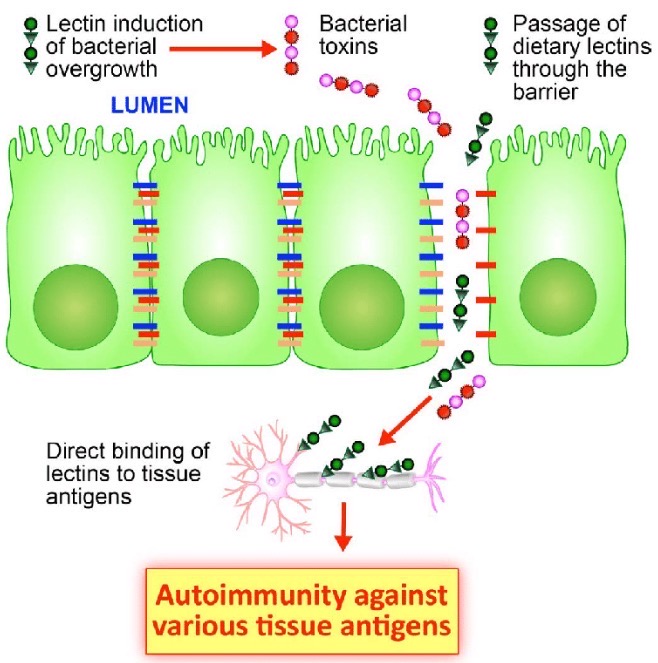
4. Lectins
Lectins are sticky proteins found in most plants. They’re highly active substances and are part of many inflammatory foods.
Studies show that lectins worsen the inflammation associated with irritable bowel syndrome and rheumatism.
This 2017 study looked at the properties and behavior of lectins and found that:
- plant-derived lectins cause a number of inflammatory diseases, including inflammatory bowel disease, diabetes, rheumatism and celiac disease
- plant lectins can activate NLRP3 and trigger the release of cytokines involved in food-related chronic inflammation
5. Mycotoxins

Mycotoxins are toxic substances formed by molds and fungi on grains, fruit and coffee beans.
Mycotoxin contamination is an ever more serious problem, because global climate change means grains are being stored in damper, warmer conditions.
One study showed that in Zimbabwe, 13–25% of wheat and 50% of corn was contaminated with mycotoxins.
Your body treats mycotoxins as an antigenic threat and releases pro-inflammatory cytokines. These bind to cell receptors, causing autoimmune problems that lead to clogged blood vessels, various cancers and nerve disorders.
6. FODMAPs
FODMAPs stands for fermentable oligosaccharides, disaccharides, monosaccharides and polyols.
All grains and most vegetables contain FODMAPs, which lead to bacterial overgrowth in the gut and are linked to chronic inflammation of the gut’s mucous lining.
Autoimmune disease and the carnivore diet
The carnivore diet is being used more and more often to treat many kinds of autoimmune disease.
Its effectiveness against chronic inflammation comes from cutting out the many harmful, toxic substances found in plant foods.
Toxins, antinutrients, carbohydrates, added sugars, fiber, FODMAPs and vegetable oils cause chronic inflammation, which drives the development of autoimmune diseases.