Some studies and thousands of individual experiences suggest that the carnivore diet is a highly effective approach to treating IBS, or irritable bowel syndrome.
In 2021, Harvard researchers ran a survey study of 2,000 people who, for various reasons, had decided to try the carnivore diet. 1
Of those who had digestive problems, including IBS, 97% said their problems had improved or even cleared up completely thanks to the carnivore diet.
In this article we’ll look at what IBS is and why the carnivore diet is such a successful tool for treating it. I’ll also show you a meal plan to help you get started.
What is IBS?
IBS is a bit of a mysterious condition—at least from the point of view of today’s mainstream medicine.
In fact, it’s classed as an idiopathic disease, which means doctors have no idea what causes IBS or how to treat it.
And that’s the heart of the problem. If doctors don’t know what causes a disease, they can’t target it, so all they try to do is ease its symptoms.
But when you realize how effective the carnivore diet is at treating IBS, it’s reasonable to assume that the modern diet, built on carbohydrates and vegetables, is at least partly behind it. 2
Symptoms of IBS
Common symptoms of IBS include:
- pain and cramps in the lower abdomen
- gas and bloating
- diarrhea or constipation
If someone has these symptoms at least three days a month for at least three months in a row, doctors will call it IBS. 3
How common is IBS?
According to 2021 research, 7–16% of the US population suffers from irritable bowel syndrome. 4
Worldwide, an estimated 10–23% of adults have IBS. Of the people who have IBS, 60–65% are women. 56
Possible causes of IBS
Although it’s not yet entirely clear what might be behind IBS, the evidence suggests the syndrome is linked primarily to the modern diet and lifestyle.
Microbial overgrowth and mood disorders
Some studies show that IBS is associated with the presence of harmful microbes in the gut. Other studies, on the other hand, suggest that IBS develops as a result of depression, stress and anxiety. 78
This is a classic chicken-and-egg problem. A diet high in toxic vegetable oils, added sugars and grains is generally linked to microbial overgrowth, digestive trouble and mood disorders. 9101112
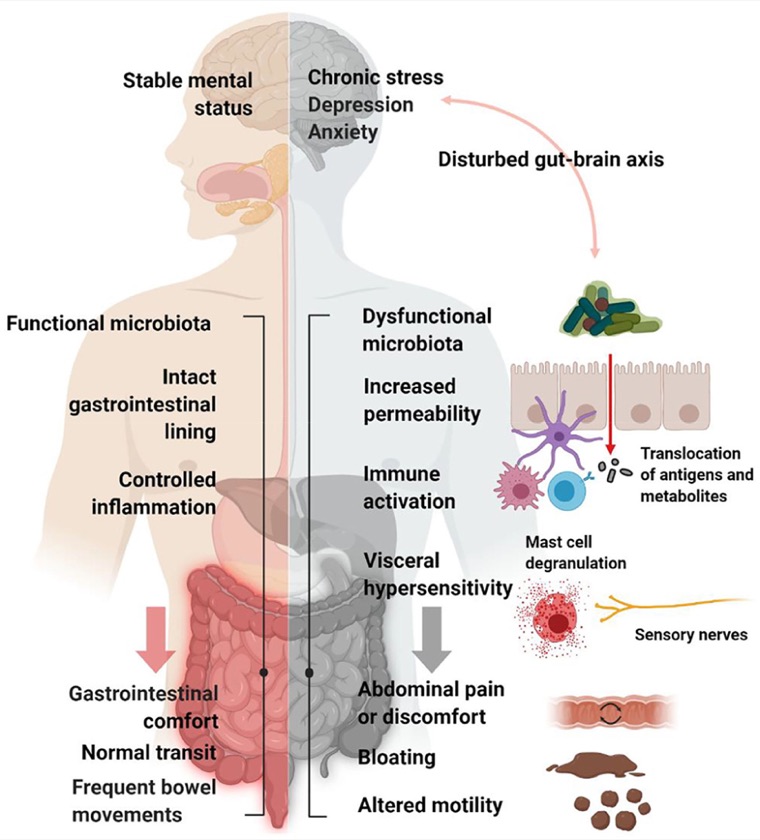
Chronic depression, stress and anxiety often lead to poor eating habits and an unhealthy lifestyle. That can end in microbial overgrowth, leaky gut and IBS. 13
The carnivore diet addresses both the psychological factors and microbial overgrowth, as the following diagram shows: you can see that mental distress leads to a dysfunctional microbiome.
FODMAPs
Some studies show that IBS may be caused by eating FODMAP foods. FODMAPs stands for fermentable oligosaccharides, disaccharides, monosaccharides and polyols.
All grains and most vegetables contain FODMAPs, which lead to bacterial overgrowth in the gut and are linked to chronic inflammation of the gut’s mucous lining. 141516
A high-carbohydrate diet
According to some studies, eating a lot of carbohydrates promotes the growth of harmful Proteobacteria while reducing the amount of Bacteroidetes (beneficial bacteria) in the gut.
Bacteroidetes act as a defense against endotoxins (substances released when bacteria break down) and also strengthen the gut wall. 17
Proteobacteria
- Harmful
- Their growth is promoted
Bacteroidetes
- Beneficial
- Their amount is reduced
- Act as a defense against endotoxins
- Strengthen the gut wall
How does the carnivore diet help with IBS?
There’s no direct study showing exactly how the carnivore diet helps resolve the symptoms of IBS, but we have plenty of surveys and stories from thousands of people who are getting good results.
Here’s a basic rundown of why the carnivore diet is so effective against IBS:
- A form of ketogenic diet
It’s a form of ketogenic diet, which reduces the harmful effects of stress on the gut microbiota in rats with IBS. 18
- Fewer carbohydrates
It removes most carbohydrates, including FODMAPs, which are directly linked to IBS symptoms.
- No lectins
It eliminates lectins, toxic plant proteins that cause leaky gut syndrome and IBS. 19
- Meat and mood
Eating meat is associated with lower rates of depression (which in turn correlates with IBS).
- It resets your gut
Removing fiber and carbohydrates from your diet dramatically reduces the harmful bacteria in your gut. Combined with removing plant toxins, the carnivore diet lets your gut lining heal. At the same time, a healthy microbiome gets restored. 20
- It delivers more nutrients
Animal foods are the most nutrient-dense food on earth and provide a whole range of key nutrients your immune system needs to work properly.
A meal plan for IBS
Here are a few meal ideas. Of course, you can eat the same thing every day like I do, but for most beginners that would probably be too radical.
As you can see, you can eat a pretty varied diet even on carnivore—it’s just a matter of imagination.
| Monday | Tuesday | Wednesday | Thursday | Friday | Saturday | Sunday |
|---|---|---|---|---|---|---|
| Ribeye steak, aged cheese with minimal lactose, eggs | Bacon and eggs, salmon cooked in butter | Ground meat (20% fat) with sour cream, soft-boiled eggs | Roast pork belly | Duck liver, ribeye steak | Prosciutto with cheese, lamb drizzled with butter | Beef ribs, shrimp in butter |
Summary
IBS is an umbrella name for a group of digestive problems linked to microbial overgrowth and mood disorders.
Both of these causes have their roots in the modern diet of developed Western societies, which is built on sugar, plant toxins and industrial seed oils.
The carnivore diet is a very effective tool for easing IBS symptoms, because it removes the carbohydrates, FODMAPs and toxins that cause IBS.
In their place, the carnivore diet gives you healthy, nourishing fats, proteins and other nutrients that reset your gut, reduce inflammation and repair the gut wall.
Sources cited
- Behavioral Characteristics and Self-Reported Health Status among 2029 Adults Consuming a “Carnivore Diet” ↩
- The western diet and lifestyle and diseases of civilization ↩
- Irritable Bowel Syndrome: A review ↩
- Diagnosis and Treatment of Irritable Bowel Syndrome ↩
- Global Research Trends in Irritable Bowel Syndrome: A Bibliometric and Visualized Study ↩
- The epidemiology of irritable bowel syndrome ↩
- Impact of psychological stress on irritable bowel syndrome ↩
- Anxiety and Depression in Irritable Bowel Syndrome ↩
- Gliadin Induces an Increase in Intestinal Permeability and Zonulin Release by Binding to the Chemokine Receptor CXCR3 ↩
- Association between small intestinal bacterial overgrowth and beta-cell function of type 2 diabetes ↩
- Evidence of the Importance of Dietary Habits Regarding Depressive Symptoms and Depression ↩
- Understanding nutrition, depression and mental illnesses ↩
- Gut microbiome-wide association study of depressive symptoms ↩
- Low-FODMAP Diet for Treatment of Irritable Bowel Syndrome ↩
- Small Intestinal Bacterial Overgrowth ↩
- Therapy of IBS: Is a Low FODMAP Diet the Answer? ↩
- High Intake of Sugar and the Balance between Pro- and Anti-Inflammatory Gut Bacteria ↩
- The Ketogenic Diet Reduces the Harmful Effects of Stress on Gut Mitochondrial Biogenesis in a Rat Model of Irritable Bowel Syndrome ↩
- Plant Lectins Activate the NLRP3 Inflammasome To Promote Inflammatory Disorders ↩
- Gut microbiota, intestinal permeability, obesity-induced inflammation, and liver injury ↩