These days, hardly anyone doubts that sugar is an addictive substance behind a whole host of health problems. Even the champions of different diets—paleo, keto, vegan—agree that sugar is bad.
But there’s one food that’s even worse than sugar, and, paradoxically, the vast majority of people still consider it part of a healthy lifestyle. I’m talking about vegetable oils and the hydrogenated vegetable fats made from them (margarines).
When I see a tub of Rama or Flora (two of Europe’s best-known margarine brands) in an ad or on a store shelf, with some outrageous claim about how good it is for your heart, it honestly makes me sick.

Nothing could be further from the truth. There is no bigger lie, because vegetable oils and hydrogenated fats are the very worst of all the food substitutes humans have ever invented.
I could stop right here, but I get it: you don’t have to take one crazy guy’s word for it, especially when you find vegetable oils and hydrogenated fats in almost every food.
Surely if it were really that bad, they wouldn’t be allowed to sell it… right? Sadly, they would.
So in this article, we’ll look together at what the latest science says about this toxic food substitute, and at how vegetable oils wreck not only your physical and mental health, but the planet, too.
Unfortunately, most of the harm you’ll read about here is ignored by modern nutrition trends. That’s why these chemical cocktails keep cheerfully showing up on store shelves, and people keep buying them in the hope of doing something good for their health.
But it’s high time we started dealing with this devastating food and farming problem. If I can help even one of you never put these poisons in your mouth again, I’ll have done my job.
What are vegetable oils?
Right from the start, you need to realize that the name vegetable oils is highly misleading. It’s actually the first lie in a long list of lies that come with these poisonous chemicals.
Most of these industrial seed and grain oils are produced in a fairly technical, energy-intensive industrial process, and that process is what makes them harmful to human health.
Popular industrial oils include:
- soybean oil
- corn oil
- sunflower oil
- canola (rapeseed) oil
- peanut oil
- rice bran oil
- grapeseed oil
- flaxseed oil
Even though these industrial oils didn’t exist for most of human evolution, today you can hardly avoid them. They’re in almost every processed food, many restaurants use them for cooking, frying, baking and salad dressings, and of course they’re in every would-be health food, like margarine and plant-based milk substitutes.
Naturally, they’re also in vegan burgers and “smart meal replacements” like the chemical slop called Mana (in Czech), which isn’t food but a toxic cocktail of sugars and vegetable oils.
Mana isn’t a meal replacement—it’s a toxic cocktail of sugars and vegetable oils.
Sadly, vegetable oils have also found their way into baby food, such as Sunar, a very popular Czech infant formula.
Why are vegetable oils harmful?
First, let’s look at a few charts.
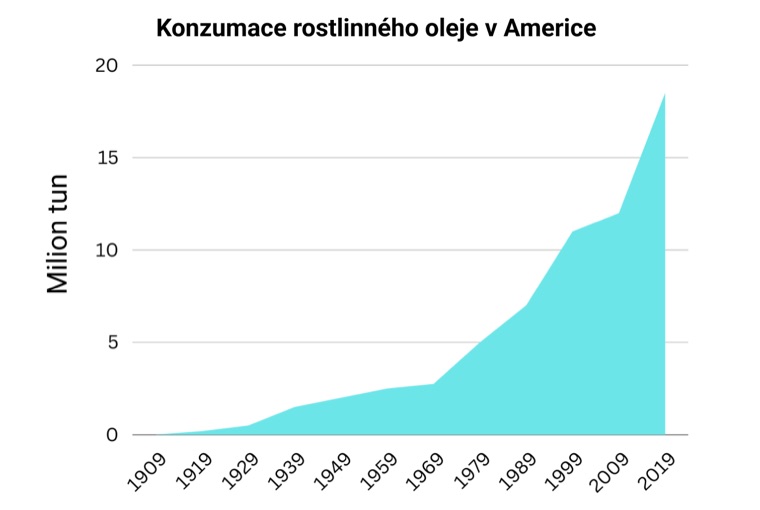
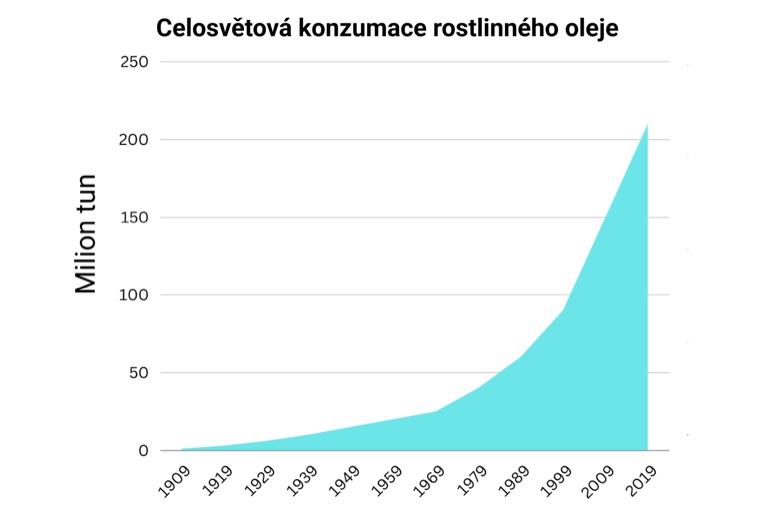
- Between 1909 and 1999, worldwide consumption of vegetable oils rose by 2,000%.
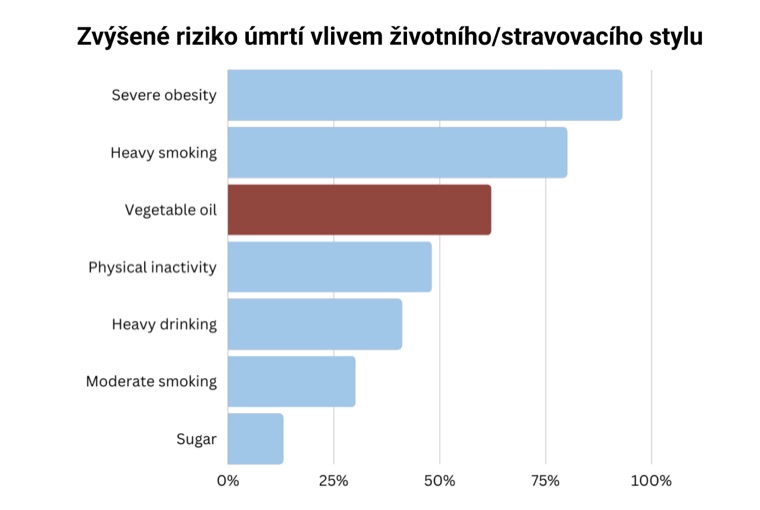
- Vegetable oils have been shown to raise the risk of death by 62%, which is worse than heavy drinking or smoking.
- Worldwide, vegetable oil production is the main driver of climate change, because of deforestation.
- Per kilogram, vegetable oil production releases more greenhouse gases into the air than any other crop.
- Vegetable oils use up to 30% of the world’s farmland to grow the crops they’re made from, yet they supply less than 0.01% of essential micronutrients (and plenty of harmful substances).
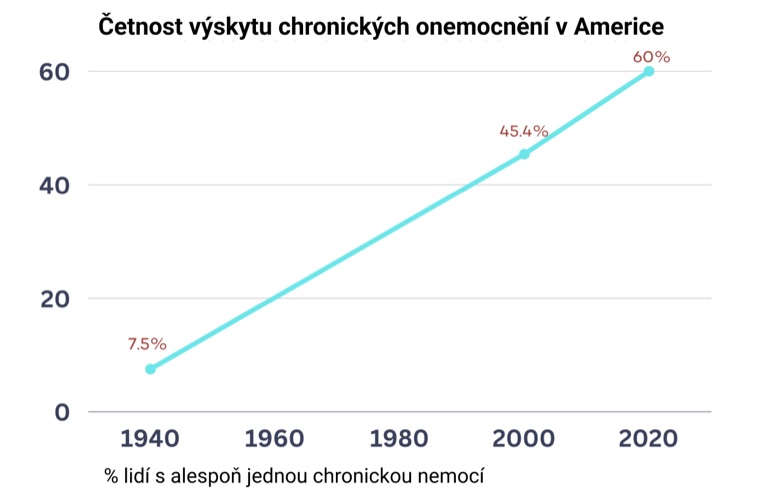
But if we’re following the generally accepted health advice—eating less animal fat and more plant foods—why do rates of chronic disease keep climbing?
Still, we have to admit that correlation isn’t causation, so let’s look at the scientific evidence.
The Israeli paradox
The Israeli paradox offers an interesting angle on the harm vegetable oil does, because Israelis eat almost exactly the way modern American nutrition experts recommend.
Israelis eat little fat, especially little saturated fat; on the other hand, they eat far more omega-6-rich vegetable oils than people in Western countries.
And yet their rates of cardiovascular disease, type 2 diabetes and other modern diseases are the same as in America, while their cancer rates—especially among women—are much higher.
This contradiction between following the recommended diet and having so much disease led scientists to conclude that the culprit is the highly inflammatory omega-6 fatty acids from vegetable oils.
Linoleic acid content of fats
| Type of fat | Average linoleic acid content |
|---|---|
| Safflower oil | 78% |
| Grapeseed oil | 73% |
| Poppyseed oil | 70% |
| Sunflower oil | 68% |
| Hemp oil | 60% |
| Corn oil | 59% |
| Wheat germ oil | 55% |
| Flaxseed oil | 54% |
| Soybean oil | 51% |
| Sesame oil | 45% |
| Canola (rapeseed) oil | 21% |
| Lard | 10% |
| Olive oil | 10% |
| Palm oil | 10% |
| Cocoa butter | 3% |
| Macadamia oil | 2% |
| Butter | 2% |
| Coconut oil | 2% |
As the table shows, vegetable oils are made up mostly of omega-6 linoleic acid, a PUFA (polyunsaturated fatty acid), while animal fats like lard and butter are largely saturated (stable) and monounsaturated (slightly unstable).
Linoleic acid, and especially the arachidonic acid made from it, are highly inflammatory substances that give rise to about 20 inflammation-causing eicosanoids.
Studies show that these substances may be behind a range of diseases, such as:
- cancer
- heart disease
- infertility
- obesity
- mood disorders, depression and anxiety
- neurodegenerative diseases (Alzheimer’s, Parkinson’s)
Cancer
Above all, vegetable oils cause:
- oxidative stress
- mitochondrial dysfunction
- genetic damage
It’s no coincidence that these are also key drivers of cancer.
In this 2009 study, mice with implanted tumors were divided into two groups and fed diets high in different fatty acids.
The mice fed linoleic acid developed metastases four times larger than mice fed monounsaturated fatty acids, found in olive oil, and the saturated animal fats that dominate red meat.
A 2010 study found that mice fed soybean oil that had previously been heated in a deep fryer showed four times more cancer metastasis than mice fed unheated oil.
If we combine the findings of these two studies, we can infer that heated vegetable oil may cause 16 times more cancer growth than healthy saturated animal fat.
Another study showed that tumors began to form once rats got 20% of their fat as linoleic acid. Yet in the modern “healthy” diet, vegetable oils don’t make up just 20% of fat intake—in many cases they’re the entire source of the calories people get from fat.
In line with these findings, a 2010 study showed that mice fed corn oil (but not animal fats) developed prostate cancer.
The same study also found that a low-fat diet does nothing to lower cancer risk compared with a diet based on animal fats.
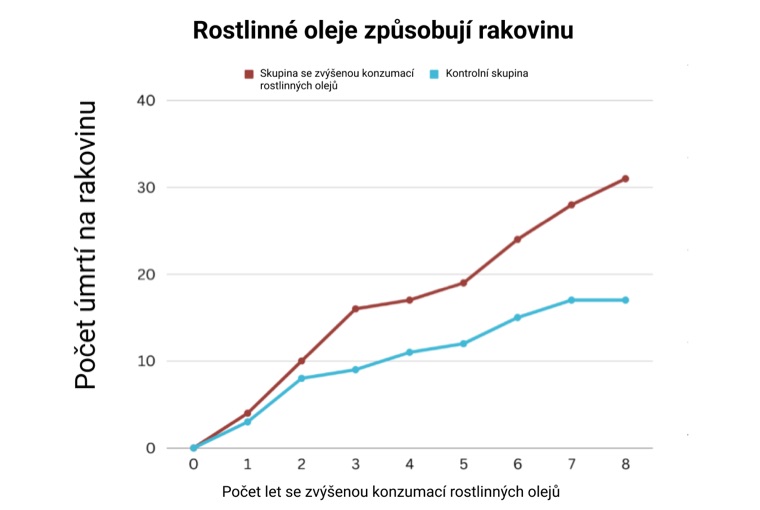
In the Los Angeles Veterans study, participants were split into two groups. In one, the researchers increased vegetable oil intake; in the other, the mix of fats people ate didn’t change. Both groups ate the same total amount of fat.
Participants in the group eating more vegetable oil were 82% more likely to die of cancer.
Even though the participants were assigned at random, the group without the extra vegetable oil had twice as many heavy smokers. Despite that, fewer people in that group died of cancer.
All-cause mortality
In this large 2013 study in Sydney, researchers split participants into two groups. As in the previous study, the amount of fat eaten was the same. But one group got most of its fat from linoleic acid and margarine, while the other got most of its fat from animal sources—butter and fatty meat.
Everything else stayed the same for both groups: the rest of the diet and the eating schedule. After seven years, the first group, the one eating vegetable oil, had a 62% higher rate of death from all causes.
Of all the known risk factors, only two are more likely to kill you than vegetable oils: morbid obesity and smoking.
In this sense, vegetable oils were even deadlier than a sedentary lifestyle and heavy drinking.
Smoking raises your risk of death by 80%. If we raise vegetable oil intake to 12% of total calories, we raise the risk of death by 62%. So every 5% increase in calories from vegetable oils is equivalent to smoking 7 cigarettes a day.
Heart disease
Another large randomized controlled trial (RCT) took place in Minnesota from 1968 to 1973. A 2016 reanalysis of the results found that participants who increased their intake of corn oil and margarine had 86% more heart attacks.
On top of that, participants over 65 had a higher risk of death after four years.
So this was yet another study whose original goal was to prove that replacing animal fats with vegetable oil would lower cholesterol and therefore reduce the risk of heart disease.
Interestingly, the group eating vegetable oil did have lower cholesterol—but also a significantly higher risk of dying of a heart attack.
How many more people will have to die of heart attacks before we abandon the dogma that animal fats are unhealthy? I think it’s high time we went back to freely eating healthy animals, whose meat and fat our bodies have evolved to handle over millions of years.
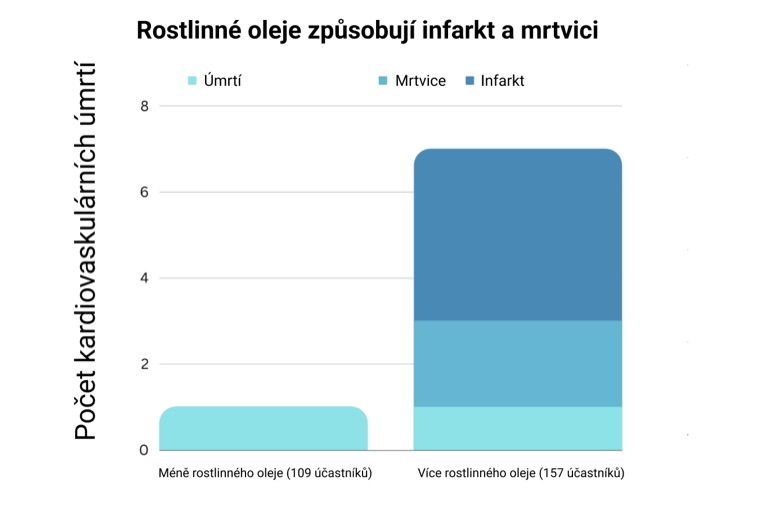
In a 2002 margarine study, 282 participants at risk of various heart problems were divided into two groups.
The first group ate margarine high in linoleic acid from vegetable oils. The second ate margarine made with fish oil, high in omega-3.
After two years, the number of heart attacks, strokes and cardiovascular deaths was 700% higher in the first group, the one eating vegetable oils.
A 1962 study looked at the effect of replacing animal fats from meat, milk and fish with corn oil.
Although the study had only 54 participants, the results were dramatic. 92% of participants in the corn oil group saw their heart problems get worse. This group also had a 364% higher risk of death.
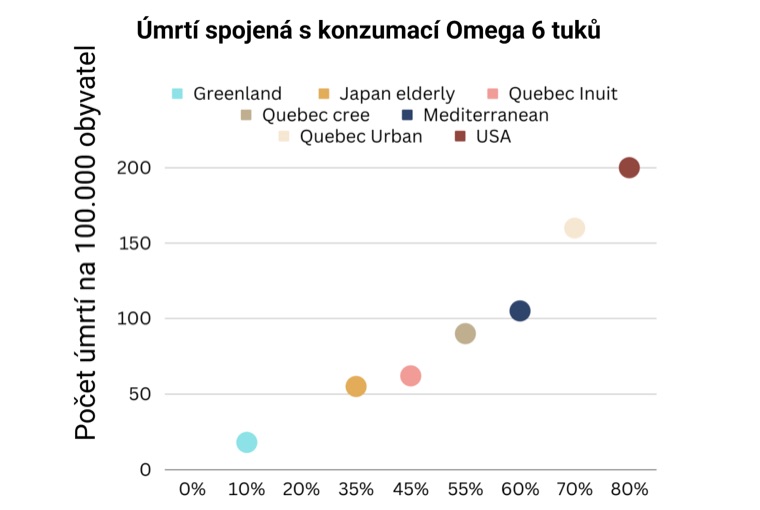
Only randomized controlled trials (RCTs) like the ones above can prove causation. But there are also many well-conducted epidemiological studies whose correlational data support the case that vegetable oils are harmful to human health.
This 2018 study states that high LDL is a negative marker of heart health only in the context of a diet rich in omega-6 fatty acids.
The researchers also found that heart attack patients had much more linoleic acid in their arteries than healthy people. There is also a positive correlation between the severity of heart attacks and the hardening of the arteries caused by omega-6 fatty acids.
The study’s authors concluded that “a large body of evidence suggests that omega-6 fats cause oxidative stress, oxidized LDL, chronic inflammation and atherosclerosis, and are likely a key factor in causing heart disease, especially when omega-6 is consumed in the form of industrial seed oils commonly referred to as vegetable oils.”
Depression and cognitive decline
In this study, researchers used blood samples from 43 participants and found that 6 of them met the criteria for major depressive disorder. All of these people had high levels of omega-6 and other markers of inflammation.
The study’s authors stated that “a diet high in omega-6 fatty acids may lead to a higher risk of depression and inflammatory diseases.”
This 2020 study in mice showed that eating soybean oil leads to weight gain and also causes gene dysregulation, resulting in more neurological disorders, including autism, Alzheimer’s, anxiety and depression.
The researchers also found that soybean oil lowers levels of oxytocin, the hormone responsible for emotional bonding. In other words, at the neurochemical level, soybean oil destroys our ability to love.
A growing number of social problems are blamed on poor mental health. It’s likely that eating less vegetable oil would mean better mental health overall.
This 2017 study shows that the negative neurological effects of vegetable oil can’t be pinned on soybean oil alone.
Mice were given the equivalent of 2 tablespoons of canola oil a day, which led to worse memory, worse learning ability and weight gain. The authors described the result of eating canola oil as significant damage to neurons and increased formation of beta-amyloid plaques, which are associated with Alzheimer’s disease.
In another animal study, this time in piglets, the authors found that when the piglets were fed a diet in which 1.2% of calories came from vegetable oils, their brains developed normally. But when the dose was raised to 10.7% of calories, their brain development suffered.

Infertility
Once you realize that vegetable oils disrupt gene signaling and trigger inflammation, it’s probably no big surprise that they hurt fertility, too.
A 2020 study looked at the effects of a diet rich in vegetable oils in young mice and showed that a high omega-6 intake in the early stages of development causes irreversible metabolic changes in the testes, with long-term damage to sperm.
Teeth
In his practice, dentist Kevin Stock found that what children eat today is the cause of their dental problems. Most of them have cavities, underdeveloped jaws, crooked teeth and breathing problems.
This study focused on the diets of children under 2 and recommended that they eat more meat.
Weight gain
Body fat isn’t a bad thing. It’s how our bodies store energy for leaner times. But if your fat was built from unstable, inflammatory omega-6 fatty acids, it can cause a whole range of diseases.
Studies show that omega-6 fats are stored very quickly as body fat.
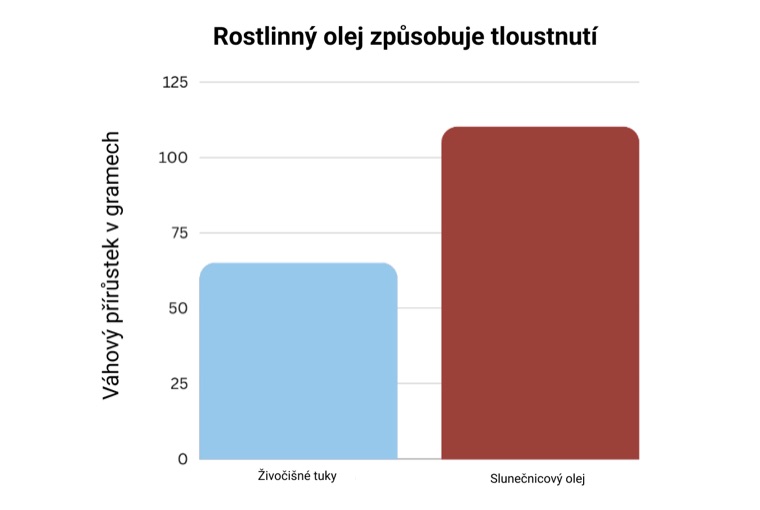
In this study, mice were divided into two groups with identical amounts of carbohydrate, protein and fat in their diets.
The only difference was that the mice in the first group got their fat as sunflower oil, which led to 12.3% more weight gain compared with the second group, which ate only animal fats.
Conclusion
Clinical trials in animals and humans, historical evidence and large epidemiological studies all suggest that vegetable oils really are harmful.
Vegetable oils cause both inflammation and disrupted hormone signaling, which raises the risk of the following diseases:
- cancer
- heart disease
- depression
- neurodegenerative disorders such as Alzheimer’s, dementia and Parkinson’s
- infertility
- obesity
Of course, many other factors harm our health and contribute to inflammatory diseases. But based on the available information, it’s fairly safe to say that eating vegetable oils ranks right up there with smoking and severe obesity.