Type “fiber” into Google and you get millions of results—when I searched in Czech, about 6 million—most of them complete nonsense: articles with nothing to back them up about how good fiber is for you.
First in line is Wikipedia, claiming that “fiber is an important component of food,” which of course isn’t true. After that came a string of online shops, all copying the same nonsense from one another.

I think it’s high time we took a hard look at fiber and figured out what’s behind this long-lived, seemingly immortal myth—one that does real damage to your health.
Let’s start with the one thing even fiber’s fans agree on: it’s indigestible. Why do you think that is? Because our digestive system isn’t built to digest fiber!
The animals that are very good at digesting fiber are ruminants. In their gut, fiber is fermented into fatty acids, thanks to bacteria that eat the fiber and give off those fatty acids.
So, as you can see, even a cow is basically on a keto diet—the difference is that its fatty acids are made for it by fiber-eating bacteria.
But humans aren’t cows. We don’t have four stomachs, and the rest of our digestive tract isn’t set up to ferment fiber either. Our digestion simply works in a completely different way. We are carnivores, and our bodies are designed to efficiently process nutrients primarily from fatty meat. 1
Of course, a claim like that goes against “common sense” and contradicts medical advice. But as Albert Einstein once said, “Common sense is nothing more than a collection of prejudices acquired by age eighteen.”
When it comes to fiber, that definition fits perfectly. Everyone has repeated the same nonsense about fiber for so long that we no longer question it—we take its benefits and its importance for granted.
So I hope this article opens your eyes and you’ll see why fiber is one big nutrition hoax.
The hoax called fiber
In 1830, the Presbyterian minister Sylvester Graham (1794–1851) was preaching that men shouldn’t have sex until they were 30, and after that only once a month.
To curb lust, Graham prescribed a vegetarian diet high in fiber.
Besides sex, Graham also objected to soft mattresses, hot baths and other “sensual” experiences unworthy of a real man, because, in his view, these things tempted men into self-indulgence.
Graham was just as stubbornly against white bread, because it contained little fiber and, according to him, caused constipation. This is where Graham flour—coarsely ground whole wheat—comes in, giving us Graham bread, Graham rolls and Graham crackers.

Despite Graham’s zeal, most normal people at the time thankfully ignored him. But a century later the whole world went completely nuts for fiber, thanks to a surgeon and businessman named John Harvey Kellogg (1852–1943).
Unlike Graham, Kellogg was a successful and trusted authority in his day, a reformer in the field of healthy eating. He had charisma, an audience, money and power, which let him spread his views to a great many people.
Like Graham, Kellogg was obsessed with chastity and constipation. True to his principles, he never had sex with his wife. His cure for sinful masturbation was circumcision for boys and mutilating the clitoris with carbolic acid for girls.
To fight these “diseases,” Kellogg prescribed a coarse vegetarian diet with 50 grams (about 1.8 oz) of bran and paraffin oil.
This approach, of course, worked very well, because loss of libido and functional impotence tend to be among the first symptoms of chronic protein deficiency, which most vegans suffer from.
For the same reason, most religions prescribe a vegan diet to their monks and nuns. It isn’t as radical as mutilating the clitoris with acid or circumcision, but it does the job.
The reason for the paraffin oil was perfectly logical, too. The fiber in Kellogg’s diet produced bulky stools and hemorrhoids, so the oil was prescribed as a laxative and lubricant that made pushing easier and relieved the pain.
Even though Kellogg was clearly a mentally ill man whose views bordered on madness, the company he founded still makes a fortune producing and promoting sugary, fiber-fortified breakfast cereals. In 2004 alone, Kellogg spent more than $3.5 billion on marketing, advertising and promotion.
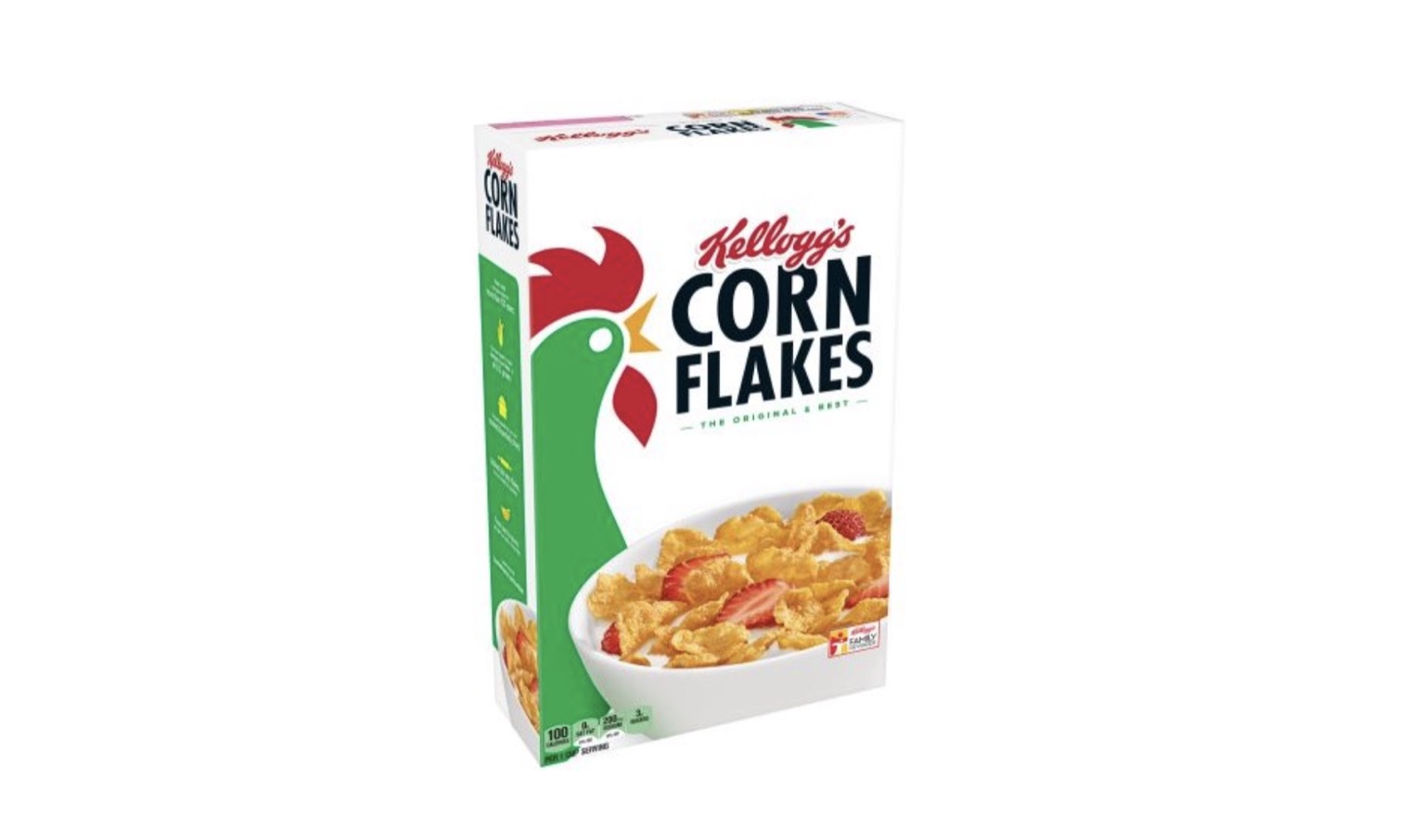
No wonder everyone keeps eagerly parroting the lies about fiber, and that it’s just as popular as it was in J. H. Kellogg’s day.
If until now you thought eating fiber was based on scientific research, clinical trials and studies, I’m afraid you now know it’s a very different story.
According to today’s thinking, fiber is a natural pipe cleaner that helps prevent digestive problems, constipation, high cholesterol, heart attacks and so on.
The U.S. Institute of Medicine recommends a daily fiber intake of 38 grams for men and 25 grams for women. 2
But if we set those two cranks, Graham and Kellogg, aside and take an unbiased look at fiber, is it really good for us? Do we need it? Not a chance!
On the contrary, the latest research shows that eating fiber is not only completely unnecessary, it may even be harmful. 34
What is fiber?
According to most authorities and commonly available sources, fiber is an indigestible carbohydrate that can be eaten from natural or synthetic sources. Common types of fiber include:
- cellulose
- psyllium
- chitin
- fructooligosaccharides
- dextrin
If you want to see what happens in your gut when you overdo psyllium, I recommend this video:
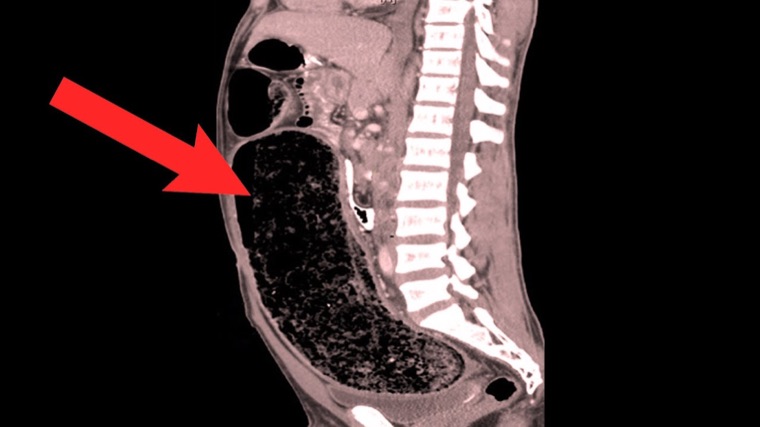
The main sources of fiber are, of course, fruit, vegetables, nuts, seeds and whole-grain bread. 5
Depending on how the body handles it, fiber is divided into two types:
- soluble
- insoluble
Insoluble fiber
Fiber is, in essence, almost indigestible. Insoluble fiber is completely indigestible, which means it passes through your entire digestive tract fully intact.
Most of the general public (and, sadly, most professionals) believe insoluble fiber is beneficial because it speeds up digestion. 6
But the properties of insoluble fiber point to the exact opposite. It doesn’t dissolve in water or in stomach acid. It acts like sandpaper and scrapes the intestinal walls. All in all, it’s completely incompatible with our digestive system. 7

Soluble fiber
Soluble fiber differs from insoluble fiber in that it’s at least partly digestible.
Most people believe this type of fiber slows digestion by absorbing water and keeps the whole digestive tract hydrated. Soluble fiber forms a gel layer on the intestinal walls, which some experts consider good for your health. 8
The problem is that bacteria love to multiply in this gel layer. The latest research shows that soluble fiber makes it easier for harmful bacteria to grow, which can lead to an overgrowth (SIBO).
Do you need fiber?
In short, no!
It turns out that people not only don’t need fiber—it can actually be harmful and cause a whole range of digestive disorders, hemorrhoids included.
Fiber made it into our diets not just thanks to Graham and Kellogg, but also because of badly interpreted epidemiological studies that confused correlation with causation.
In the late 19th century, grain millers learned how to efficiently separate the grain from the bran and produce a finely ground powder we call flour. 9
This new ingredient quickly became very popular in developed countries, because people fell in love with the soft, tender texture of the bread and pastries it made.
Epidemiologists then began to notice that countries with high white-flour consumption had more disease, while people in countries without access to it were healthier. 10
The assumption was that the missing fiber in flour was to blame. Grain producers, of course, were quick to seize this market opportunity and cash in on selling a waste product that only had to be renamed “healthy fiber.”
This is nothing new. Something similar happened with whey, which used to be dumped into rivers. Because that caused algae blooms, someone came up with a better solution: pour the whey down athletes’ throats for big money under the name “whey protein.”
Simply put, these epidemiologists made the same rookie mistake as many of their successors: they confused correlation with causation and reached the wrong conclusion.
In reality, the cause of these diseases wasn’t a lack of fiber but a lack of fat-soluble vitamins, as Dr. Weston A. Price later showed. 11
Fiber and cholesterol
One of fiber’s supposed benefits is its ability to lower cholesterol.
One study found that a high-fiber plant-based diet lowers LDL by a third. 13
But this property of fiber isn’t as useful as it might seem. Plenty of toxic substances lower cholesterol, too. 13
High cholesterol isn’t a problem in itself; it usually points to deeper problems. 14
Cholesterol works a bit like a firefighter who shows up at the scene of a fire to put it out. In the same way, the body gathers cholesterol at the site of inflammation to calm it down.
Fiber and blood sugar
Fiber can lower the glycemic index of certain foods and so helps stabilize blood sugar. Studies show that fiber’s ability to slow digestion can reduce blood sugar by 10 to 20%. 15
But even this benefit needs to be seen in context. Most people eat far too many high-glycemic foods. Slowing digestion with fiber is completely pointless when you eat meat and animal products. 16
On top of that, keep in mind that fiber slows the absorption not only of macronutrients but also of minerals and trace elements, which is clearly not a good thing.
Fiber and weight loss
The latest research shows that the link between fiber and weight loss isn’t significant. Most studies give mixed results, and the studies that show a big effect of fiber on weight loss were poorly designed and carried out, so they tell us nothing.
Even fiber’s advocates admit that the very limited number of clinical trials comparing high-fiber and low-fiber diets hasn’t produced consistent results suggesting that a fiber-rich diet works better than one without fiber. 17
Some types of fiber, on the other hand, cause bloating and pain. Popular guar gum, for example, which is added to yogurt, ice cream and mustard, has been linked to lower abdominal pain, bloating, gas, diarrhea and stomach cramps.
A 2001 analysis looked at the effect of guar gum on weight loss. Its results state: “Guar gum is not an effective tool for reducing body weight. Considering the adverse effects associated with its use, the risks outweigh the potential benefits. It therefore cannot be recommended as a suitable means of weight reduction.” 18
Fiber and your body
Your body can’t process fiber, but the bacteria in your gut can. These bacteria ferment fiber and produce gases such as hydrogen and methane in an exothermic reaction that can damage organs and tissues.
Eating fiber may even affect fertility. One study found that women who ate high amounts of fiber were less fertile. 19 And, of course, fiber also causes socially awkward bloating and gas. 20
Eating more fiber also raises the risk of developing diverticulosis. Yet the website of University Hospital Brno, a major Czech teaching hospital, tells you that “it is caused by a lack of fiber in the diet and the resulting difficulty emptying the bowels,” which is, of course, an outrageous lie.
Sometimes I feel that, regardless of education, some people simply lack the basic ability to think logically. Fiber is what causes difficult bowel movements: if you don’t wash it down with enough water, it hardens, and the result is large, hard stools.
One study showed that people who ate a lot of fiber and had frequent bowel movements also had a higher risk of developing colon disease. 21
Another study, from 2007, found that people put on a low-fat, high-fiber diet saw no improvement in their polyps. 22
On the other hand, this study showed that people who cut fiber out of their diet completely stopped suffering from bloating, pain, constipation and bleeding. Those who added even more fiber, by contrast, did worse.
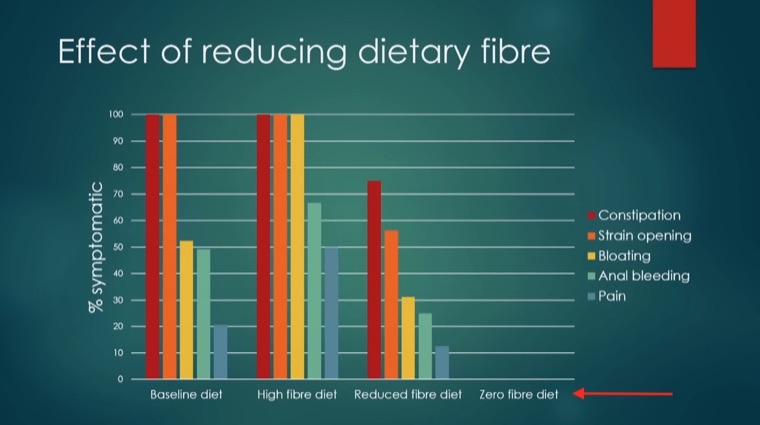
Fiber and the latest research
The latest research only confirms the suspicion that most types of fiber are just harmful waste.
A 2012 study published in the World Journal of Gastroenterology looked at the effect of fiber on constipation and stated that “the earlier belief that fiber helps with constipation is nothing more than a myth; on the contrary, our study showed a very strong correlation between improvement in constipation and eliminating fiber intake.” 23
Research also confirms that excess insoluble fiber binds minerals such as iron, zinc, magnesium and calcium, which prevents their absorption. Excess insoluble fiber has also been linked to suppressing digestive enzyme activity to the point that protein is poorly absorbed.
The last refuge of fiber’s advocates is its ability to boost production of certain fatty acids. Some soluble fiber is fermented by gut bacteria and turned into fatty acids such as butyrate. 24
These fatty acids then help fight neurodegenerative disease, cancer and obesity. 25
The link between fiber intake and butyrate production has led some gut-health experts to recommend eating lots of fiber.
Unfortunately, these experts failed to realize that butyrate and the other beneficial fatty acids can be had in a much simpler and safer way.
Butter, yogurt, milk, cream and other dairy products are rich in anti-inflammatory butyrate, and unlike fiber, they don’t irritate the gut. 26
Why is fiber added to food?
You may be wondering: if fiber is so unhealthy, why does it keep getting added to food?
Mainly because official dietary guidelines keep insisting on long-debunked nonsense and ignore the latest research in this area.
So fiber is still added to processed foods to please customers who feel that eating products with added fiber is doing something good for their health.
Sadly, many health-conscious people have bad information and distorted ideas, so they keep buying high-fiber foods. The most popular of these are grain-based products. 27
What to expect when you quit fiber
If you’ve decided to say goodbye to fiber and really do something for your health, be prepared: it may not be a walk in the park.
A sudden change in diet can temporarily throw off your usual bowel routine. Many people on a meat-based diet find that their digestion slows down a lot. That’s completely natural, and it’s something you gradually get used to.
If you get constipated, take electrolytes and drink enough water. It really is only temporary, until your body gets rid of all the fiber—and, above all, of the bacteria in your gut that were feeding on it.
Some experts also claim that sticking to a low-carb diet over the long term can harm not only the bad gut bacteria but the good ones as well. That’s why it’s said that a low-carb diet can reduce an overgrowth of bad bacteria in the short term, but that in the long run a fiber-free diet is unhealthy, because it can damage the mucus layer lining the gut.
There are epidemiological studies from Poland that looked at the effect of a low-carb diet on the incidence of colon cancer, but their conclusions only went as far as correlation. 2829
On the other hand, a growing number of people who have lived mostly on fatty meat and cut carbs for years paint a completely different picture. As a rule, they all report a marked improvement in their health and the resolution of long-standing problems and chronic diseases.
Sources
- The evolution of the human trophic level during the Pleistocene ↩
- Dietary Reference Intakes for Energy, Carbohydrate, Fiber, Fat, Fatty Acids, Cholesterol, Protein, and Amino Acids ↩
- The hot air and cold facts of dietary fibre ↩
- The polyp prevention trial continued follow-up study: no effect of a low-fat, high-fiber, high-fruit, and -vegetable diet on adenoma recurrence eight years after randomization ↩
- Fiber ↩
- The Role of Fiber in Energy Balance ↩
- The problem of insoluble fibre in irritable bowel syndrome ↩
- The gel-forming polysaccharide of psyllium husk ↩
- Flour Power ↩
- Diseases of Civilization and Nervous Disorder in the Age of Enlightenment ↩
- Who was Dr. Weston A. Price? ↩
- A systematic review of the evidence supporting a causal link between dietary factors and coronary heart disease
- Cholesterol, longevity, intelligence, and health ↩
- Correlation Between Subclinical Hypothyroidism and Dyslipidemia ↩
- Consumption of whole-grain cereals during weight loss: effects on dietary quality, dietary fiber, magnesium, vitamin B-6, and obesity ↩
- Improvements in glucose metabolism and insulin sensitivity with a low-carbohydrate diet in obese patients with type 2 diabetes ↩
- Health benefits of dietary fiber ↩
- Guar gum for body weight reduction: meta-analysis of randomized trials ↩
- Effect of daily fiber intake on reproductive function: the BioCycle Study ↩
- Excretion of breath and flatus gases by humans consuming high-fiber diets ↩
- Fiber and colorectal diseases: Separating fact from fiction ↩
- The polyp prevention trial continued follow-up study: no effect of a low-fat, high-fiber, high-fruit, and -vegetable diet on adenoma recurrence eight years after randomization ↩
- Stopping or reducing dietary fiber intake reduces constipation and its associated symptoms ↩
- Effect of purified cellulose, pectin, and a low-residue diet on fecal volatile fatty acids, transit time, and fecal weight in humans ↩
- The Warburg effect dictates the mechanism of butyrate-mediated histone acetylation and cell proliferation ↩
- Butyrate, a metabolite of intestinal bacteria, enhances sleep ↩
- Is Adding Fiber To Food Really Good For Your Health? ↩
- Dangers of Zero-Carb Diets, II: Mucus Deficiency and Gastrointestinal Cancers ↩
- Muc1 cell surface mucin attenuates epithelial inflammation in response to a common mucosal pathogen ↩