You may have already heard about a new diet that Joe Rogan and Paul Saladino promote as a modified carnivore diet.
According to Saladino, this way of eating matches what our ancestors ate, and it suits physically demanding sports where intense training quickly drains the body’s glycogen energy stores.
But is eating fruit with meat a good idea? A lot depends on how well your body can tolerate toxic compounds, carbohydrates and fiber.
Why meat and fruit?
Meat and fruit is a particular take on the carnivore diet, one that is both simple and complicated. On the one hand, it says you eat only meat and fruit. On the other, how much meat and how much fruit you combine can lead to very different results and side effects.
A typical meat-and-fruit diet
A typical meat-and-fruit diet is still built on eating fatty meat. Although you can choose from beef, game, pork, poultry and fish, the king is a well-marbled rib-eye steak.
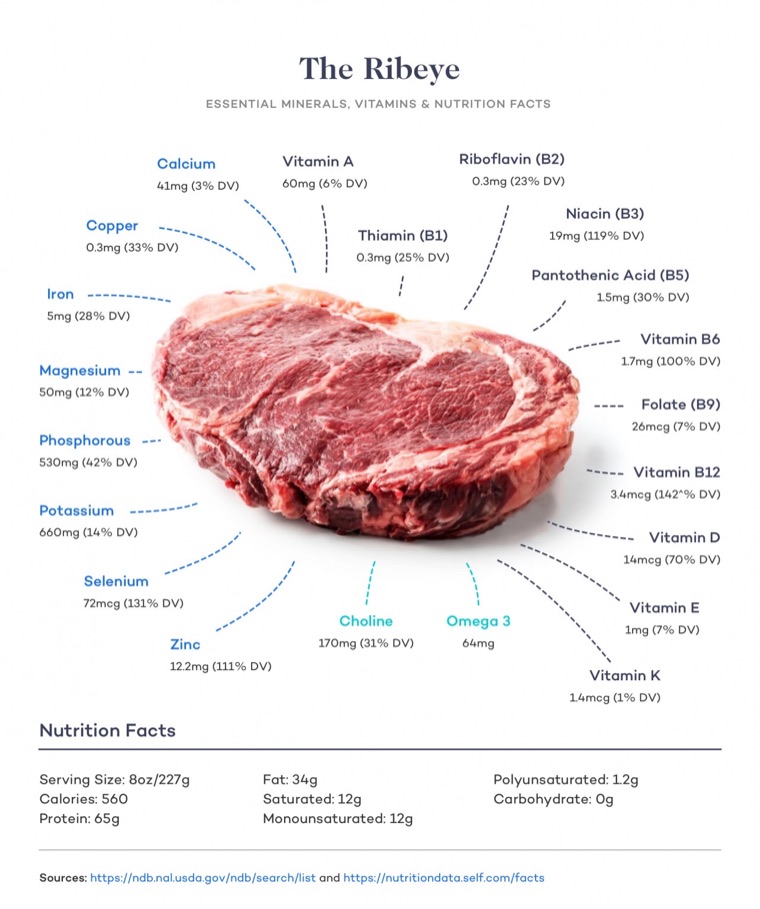
The reason for beef is that the meat of ruminants has a near-perfect ratio of healthy fats and a complete protein profile (all the essential amino acids). It also contains plenty of easily absorbed nutrients such as zinc, B vitamins, iron and selenium, and compounds found only in meat, like CoQ10 and carnitine.
Pork, poultry and fish should therefore be just a supplement, because they contain fewer nutrients and a worse ratio of fatty acids.
Followers of the meat-and-fruit diet eat roughly half a kilo to a kilo (about 1–2 lb) of meat a day.
What fruit, and how much?
There is no clarity on this at all. Some eat only a small amount of fruit high in vitamin C, as insurance against scurvy. They keep their total carbohydrates under 50 grams a day, which should keep them in ketosis.
Then there’s a group that focuses exclusively on non-sweet fruits like coconut, avocado and squash. But there are also people who happily eat 300 grams of sugar a day from sweet fruit like pineapple or apples—and Paul Saladino is one of them.
From my point of view, the answer is simple: no fruit, in no amount. Fruit contains sugar, especially the problematic fructose, and it’s not wise to play with fire. If you’re addicted to sugar, it’s not a good idea to keep teasing and tempting yourself. It’s like offering an alcoholic just one glass.
Plenty of people have added fruit to their meat, and before long they broke loose and ended up back in sugar up to their eyeballs.
Where did this strange idea even come from?
The meat-and-fruit diet was introduced by Paul Saladino, originally a sensible advocate of the carnivore diet, who for some reason switched to eating fructose after a few months on meat. Officially, Paul talks about his health getting worse on an all-meat diet and about needing to eat sugar.
Others dispute his claims. What they see as the problem is precisely his excessive consumption of organ meats—which he promotes mainly because he owns a supplement company that sells dried organs in capsules.
Above all, though, Paul is an influencer and YouTuber who makes his living from advertising tied to new and, in its way, shocking content. In my opinion, that’s the main reason he came up with the idea of eating meat with fruit.
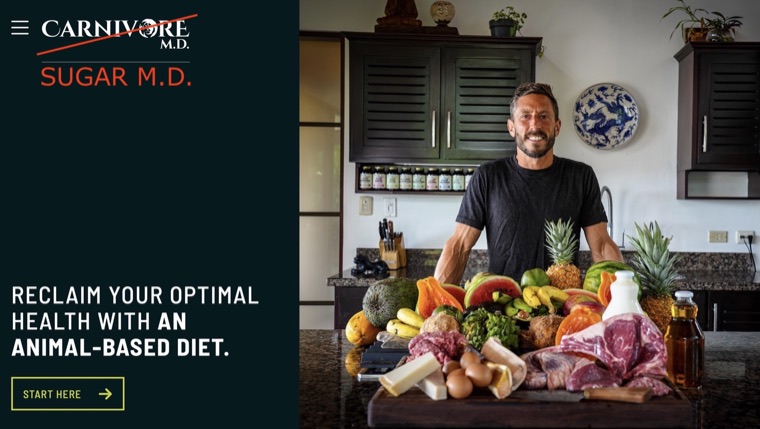
Because if he ate only meat and drank water, he’d soon run out of things to make videos about. Paul does have a medical degree, but he never practiced medicine. His conclusions are based purely on observing his own body. On top of that, Paul lives in Costa Rica and spends three hours a day surfing.
Based on various dubious studies, Paul has formed the opinion that the rise in insulin after a meal helps the body retain electrolytes and is important for synthesizing key antioxidants like glutathione.
The combination of meat and fruit may suit Paul, given his age, physical condition and athletic activity, but it’s definitely not an approach he should recommend to everyone. Claiming that people on the carnivore diet must immediately start eating fruit is completely irresponsible.
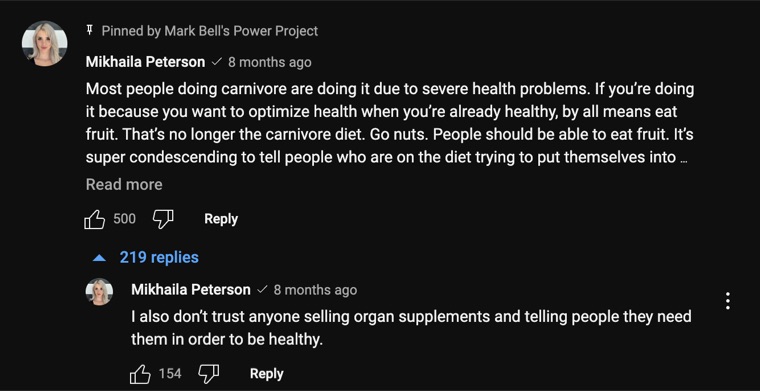
As Mikhaila Peterson wrote in a comment under this video, in which Saladino defends his crazy opinion, most people start the carnivore diet for health reasons.
If someone is trying it just to improve their already good health, fine—let them eat fruit. But then, on principle, it simply can’t be called the carnivore diet anymore.
If, however, someone suffers from a serious chronic disease and is trying to keep it in remission, then it’s completely inappropriate to tell them fruit is essential, because that just isn’t true.
The really serious problem with eating fruit, though, is fructose, which the body can’t use and which is metabolized only in the liver.
What do you need to watch out for?
Fruit is colorful and sweet because, unlike vegetables, its whole purpose is to be eaten by animals, which then carry the seeds inside it over long distances and excrete them along with a dose of fertilizer.
For most people, eating fruit now and then is no problem, but some may be more sensitive to certain kinds of fruit and the toxic compounds they contain.
Fruit was part of the diet of hominids and the first humans. An important difference that sets humans apart from our ape ancestors, however, is that we first learned to eat the leftovers of animals killed by predators, and later learned to hunt those animals ourselves.
Thanks to this development, fruit moved to the margins of our diet—especially during migrations to cold regions, where fruit was very scarce.

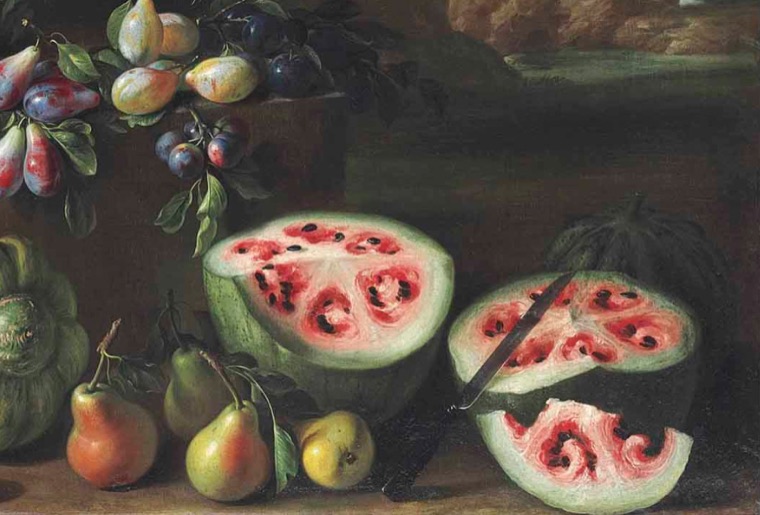
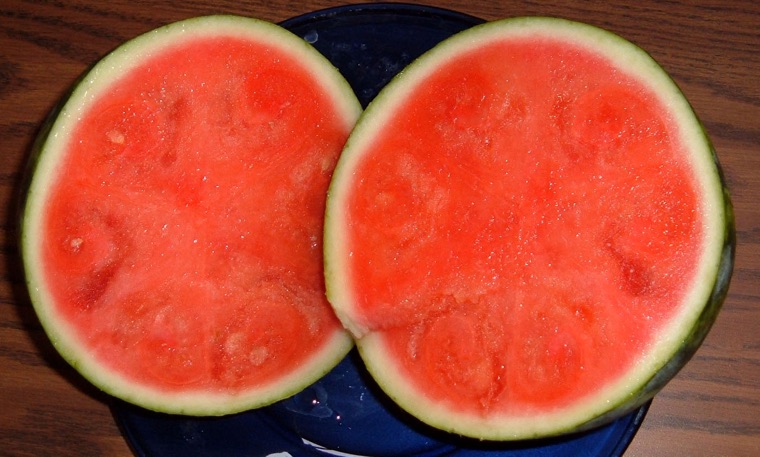
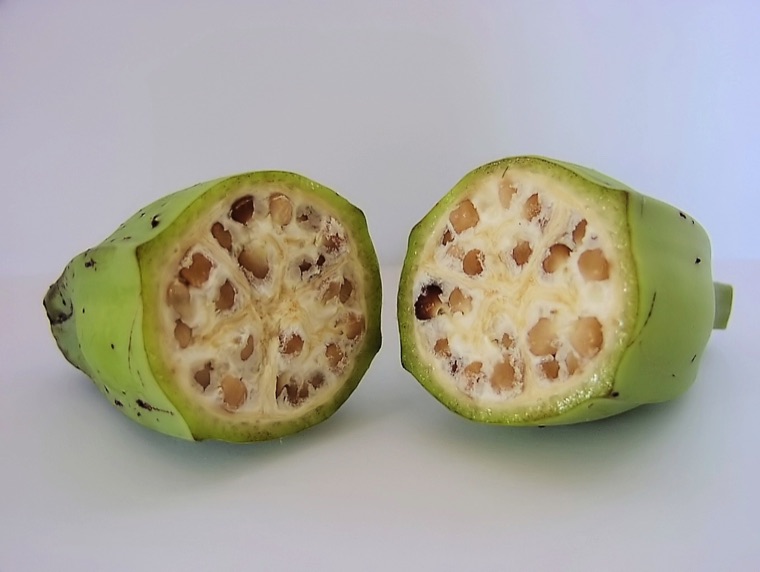
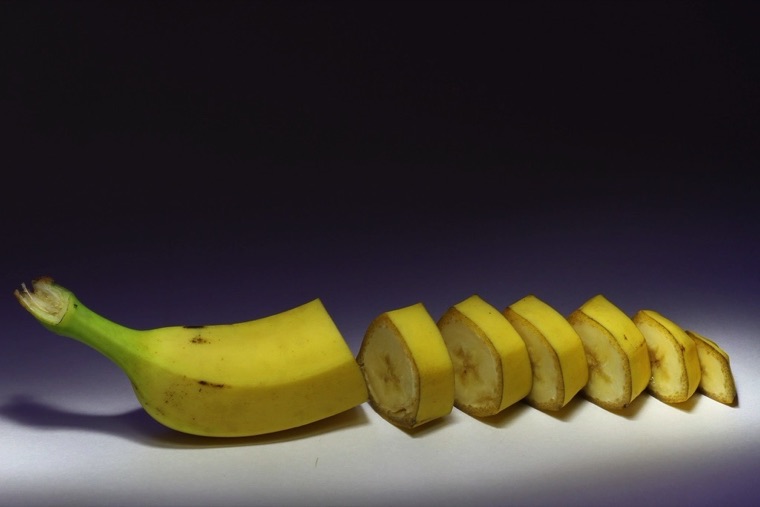
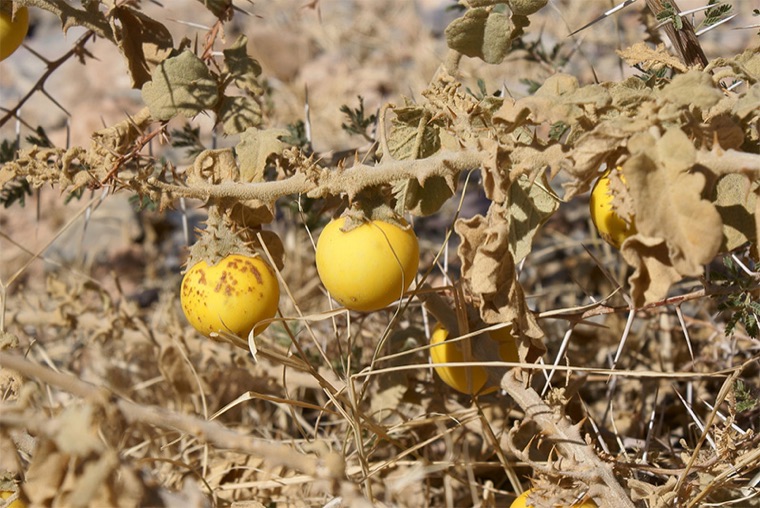
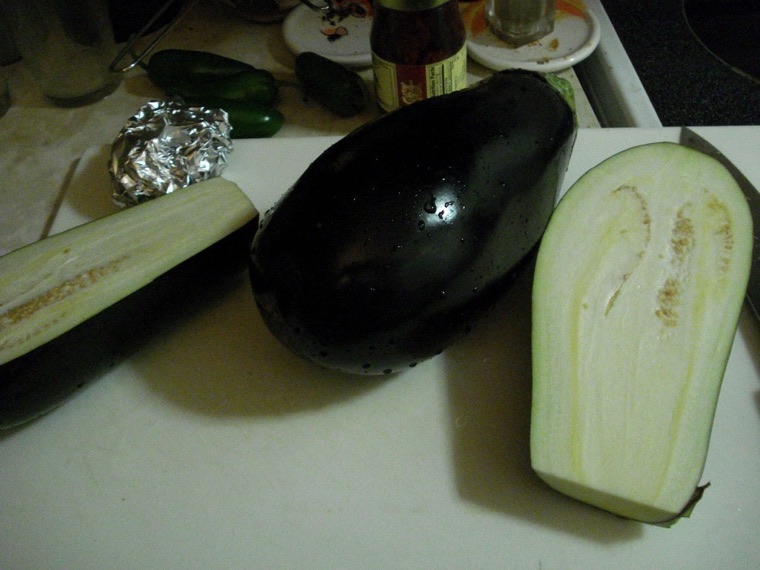
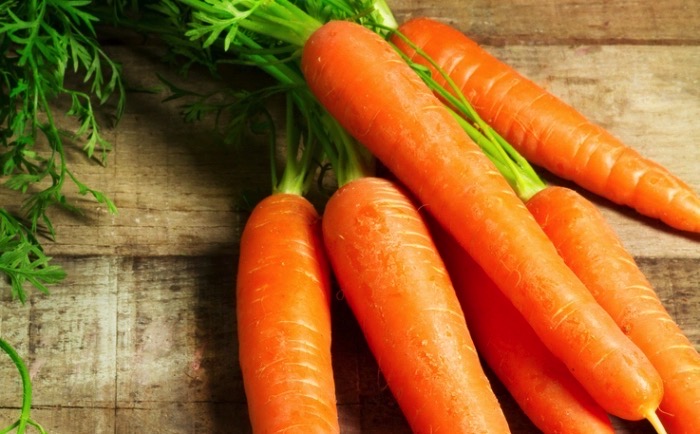
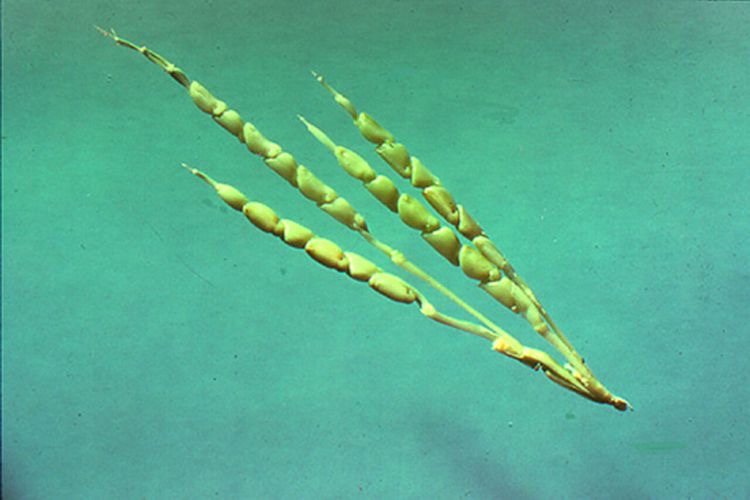
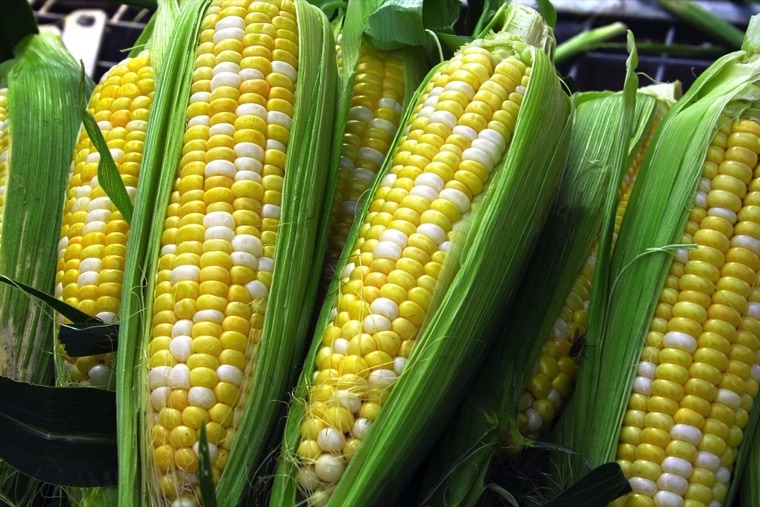
What we call fruit today is actually a miracle of industrial engineering. From small, hard, sour fruits, we gradually managed to breed big, sweet fruit that resists mold. It’s sometimes called “frankenfruit.”
Here’s a comparison of a few more fruits and vegetables as they grew in nature, before we started breeding them.
| Original (wild) version | Modern (cultivated) version |
|---|---|
 |  |
 |  |
 |  |
 |  |
 |  |
Do you need the nutrients in fruit? No!
Although most fruit contains some antioxidants and vitamins, studies show that these compounds are hard to absorb and use.
This 2009 study found that phytochemicals have no effect even on short-term health.
The reason vitamins and antioxidants from fruit are poorly absorbed is that the human body evolved to be geared toward getting vitamins and antioxidants from animal sources. That’s why many of them, such as vitamins A, D, E and K, need fat to be properly absorbed.
The plant versions of these nutrients come in a form the human body can’t optimally process and use. That’s why our bodies treat phytochemicals, for example, as xenobiotics with no nutritional value. That’s just a modern name for unwanted foreign substances the body gets rid of quickly.
Antioxidants are generally beneficial, but metabolically we’re built so that, under normal circumstances, oxidants and antioxidants are in balance, so there’s no need to supplement extra antioxidants.
Vitamin C in meat
Contrary to popular belief, fresh meat contains enough vitamin C.
Research from 2007 found that fresh beef contains about 1.6 milligrams of vitamin C per 100 grams of meat, and in the case of exclusively grass-fed cattle, it’s as much as 2.5 milligrams per 100 grams.
So if you eat a kilo (2.2 lb) of beef a day, you get about 16 milligrams of vitamin C (25 milligrams with grass-fed meat). That’s more than enough to prevent vitamin C deficiency and scurvy.
Fruit and ketosis
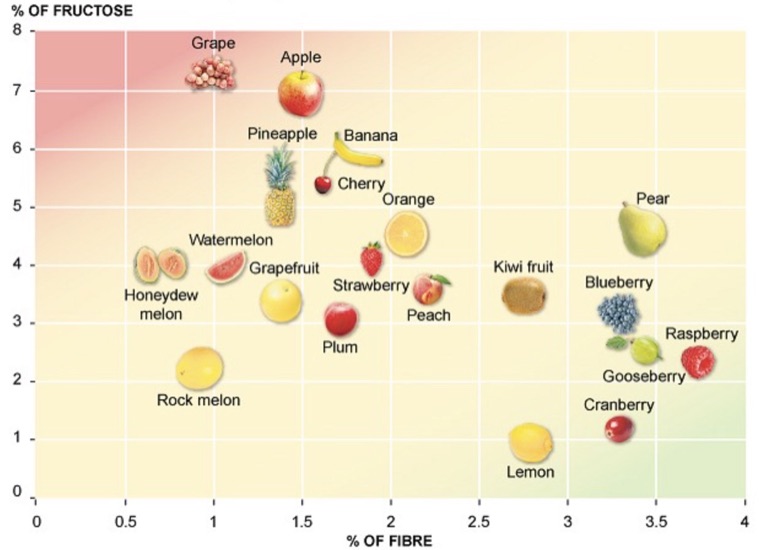
If you want to try the meat-and-fruit diet and stay in ketosis at the same time, take a look at the chart and choose only low-carb fruit.
Which fruit should you avoid?
Simple: the liquid kind. There’s a huge difference between eating whole fruit and drinking fruit juice. Fruit smoothies and dried fruit contain a lot of sugar.
This 2019 study found that a single 100 ml (about 3.4 fl oz) glass of a sugary drink (including fruit juice with no added sugar) raises the risk of cancer by 18%.
Does it make any sense?
It doesn’t. The meat-and-fruit diet is considered one of the variations of the carnivore diet, but really it’s Paul Saladino’s desperate move to keep his online audience interested. Unfortunately, Saladino has a big reach today, thanks in part to his book and his appearances on the podcast of Joe Rogan, who also follows his diet.
If you’re a professional athlete and you know you can’t perform at your peak without sugar, then adding fruit to your diet may be a way to reach your goals. For everyone else, though, it’s the road to hell.
Ken Berry, Anthony Chaffee and Bart Kay have all weighed in on the meat-and-fruit concept in several places, and they consider adding fructose to a meat diet total insanity.