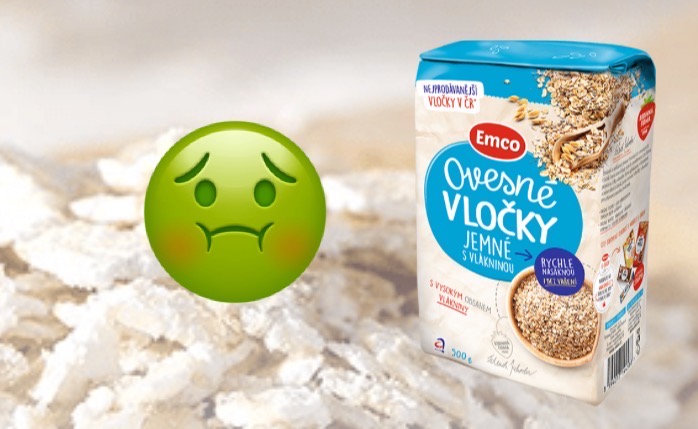
How many times have you heard on TV or read online (in Czech) that oatmeal is the healthiest breakfast in the world? Or that breakfast is the most important meal of the day? (Neither one is true…)
And that if you eat oatmeal, which is considered a superfood, you’ll have lower cholesterol, you’ll protect your heart — in short, you’ll be giving your body exactly what it needs. Right.
Unfortunately, it’s all nonsense.
If you know someone who stuffs themselves every morning with oatmeal made at home from the most expensive organic oats money can buy, maybe you could send them a link to this article and do something for their health.
I’ve already wrecked my own health — thanks (among other things) to years of eating oatmeal for breakfast — and there’s no reason for others to wreck theirs after falling for the media hype about how good oats are for you.
1. Cholesterol
It may well happen that eating oatmeal for breakfast really does lower your total cholesterol, and maybe even the so-called “bad” LDL cholesterol.
The problem is that lowering your cholesterol isn’t as healthy as we were told for so long. And unless you put away 20 bowls of oatmeal a day, you probably won’t manage any significant drop in cholesterol anyway.
Above all, though, you need to realize that cholesterol is a very important substance your body uses to build cells. Your brain holds 20% of all the cholesterol in your body.
Unfortunately, even today you can read on respected websites like the Mayo Clinic’s that high cholesterol can lead to fatty deposits building up in your blood vessels, which makes it harder for blood to flow. Sometimes these fatty deposits can break off and form a clot that causes a heart attack.
What they don’t say at all is why cholesterol builds up in the vessels in the first place — what causes these fatty deposits to form. But you, I hope, already know that cholesterol is just a firefighter that rushed to the fire (the inflammation) to patch up damage to the vessel that it didn’t cause.
2. Carbohydrates
Oats contain a very large amount of carbohydrates. They contain a starch called amylopectin A.
As soon as you put oats in your mouth, amylase (an enzyme in your saliva) immediately starts breaking amylopectin down into simple sugars.
That causes a rapid rise in blood sugar and, along with it, a rise in the amount of insulin in your blood.
High blood sugar causes glycation, in which glucose molecules bind to various serum proteins. The result is harmful molecules called advanced glycation end products, or AGEs for short.
Ironically, among other things AGEs cause your skin to age fast.
But high blood sugar doesn’t just damage skin and blood cells — it also destroys brain cells, the cells of your digestive tract, and your musculoskeletal system (your joints).
- In the mouth
Amylase, an enzyme in your saliva, starts breaking amylopectin down into simple sugars.
- In the blood
Blood sugar rises rapidly, and the amount of insulin with it.
- Glycation
Glucose molecules bind to various serum proteins.
- AGEs
The result: advanced glycation end products, which among other things cause your skin to age fast.
3. Weight gain
High levels of glucose and insulin will definitely help you put on weight. The fat will be stored not just on your belly and your butt (and thighs) but, unfortunately, above all in your liver and pancreas.
So if you want to gain weight and wreck your organs, oatmeal is a sure and quick way to get there.
4. Vitamins and minerals
It’s true that oats contain plenty of vitamins and minerals, but the problem is that they’re bound to the protein avenin, which makes them practically unusable for humans.
The same goes for practically all plants that are, in theory, a rich source of these nutrients — thanks to various antinutrients, our bodies can absorb and use only a tiny fraction of them.
No matter how many vitamins and minerals oats contain, most of them, bound to avenin, will just pass right through you and end up in the toilet bowl.
On top of that, avenin causes allergic reactions in some people, including:
- a swollen tongue and throat
- fatigue
- an itchy mouth
- diarrhea
- vomiting
- skin problems

In the luckier, hardier people, avenin “only” causes increased inflammation of the gut, which may never show up in their whole lives — or may end in one of the popular autoimmune diseases, such as ulcerative colitis or Crohn’s disease.
5. Hunger
Since oats contain next to nothing your body can actually digest (fiber is indigestible, and the vitamins and minerals are bound to avenin), all that’s left is the sugar, which gets processed very quickly — and within 2 hours you’ll be hungry again.
Simply put, oats won’t help you keep hunger at bay and can’t keep you full for long.
6. Fiber
Oats contain a lot of fiber, and some manufacturers even brag about adding more. Thanks to the fiber, you can look forward to bulky stools that will give you hemorrhoids.

7. A healthy breakfast
If you trust the popular recipes and add fruit or honey to your oatmeal and wash it all down with orange juice, you’ll make everything I’ve written about in this article even worse.
Conclusion
What we’re told
- Lower cholesterol
- A superfood, full of vitamins and minerals
- Exactly what your body needs
What I found
- Lowering cholesterol isn’t as healthy as we were told
- Bound to avenin, most of them just pass right through you
- Next to nothing your body can actually digest
I hope you now see that oats, in any form, are a really bad idea for the human body. I probably shouldn’t even call them food — more like an edible substitute. As the saying goes, every plant is edible, but some only once.
Others, on the contrary, you can eat for decades without any obvious, acute ill effects, because your body will do its very best to cope with the load of waste and poisons you keep shoving into it. But one day it may get tired of it, run out of strength and give up.